You Won’t Believe What Trincomalee’s Cityscape Hides
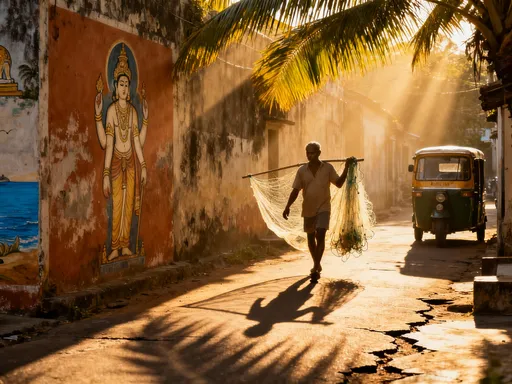
Trincomalee, tucked along Sri Lanka’s east coast, isn’t just golden beaches and turquoise waves—it’s a cityscape of surprising contrasts. Ancient temples rise beside colonial ruins, while local markets buzz beneath swaying palm trees. I wandered its streets with no plan and found beauty in the everyday: fishermen hauling nets at dawn, colorful tuk-tuks darting through sunlit alleys. This isn’t just a beach escape. It’s a living, breathing urban rhythm shaped by history, culture, and sea. Let me show you the side most travelers never see.
First Impressions: A City Shaped by the Sea
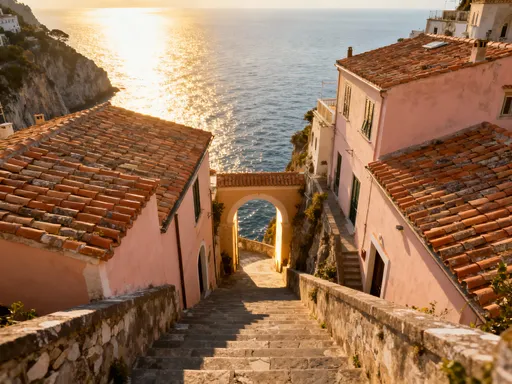
Approaching Trincomalee from the sea, one immediately understands why this harbor has drawn empires for over two millennia. Nestled within one of the largest natural deep-water harbors in the world, the city curves around a sweeping bay framed by rocky headlands and lush hills. The ocean doesn’t just border Trincomalee—it defines it. Streets follow the coastline’s contours, buildings rise on gentle slopes facing the water, and nearly every local conversation seems to circle back to the tides, the fish catch, or the monsoon’s timing. The salty breeze carries stories: of ancient traders docking with spices, of Portuguese cannons echoing across the bay, of modern-day fishermen mending nets under the morning sun.
The natural harbor, known locally as Gokarna Bay, has long been a strategic maritime crossroads. Its sheltered waters allowed ships to anchor safely even during rough weather, making it a prized possession for successive colonial powers—first the Portuguese, then the Dutch, followed by the British. Remnants of this layered past remain visible in the stone bastions of Fort Frederick, which sits atop Swami Rock, where the Indian Ocean crashes dramatically against sheer cliffs. Yet today, the harbor is not a relic but a working lifeline. Small wooden boats bob beside larger trawlers, their hulls painted in bright blues, greens, and reds. Nets are spread out on the shore to dry, weighted down with stones, while children play nearby, barefoot and laughing. The rhythm of the sea governs the city’s pulse.
Walking along the waterfront at sunrise, one is struck by the harmony between nature and urban life. The scent of brine mingles with the earthy aroma of drying fish, and the rhythmic slap of waves against weathered stone walls creates a constant, soothing background. Fishermen haul in their morning catch, their muscles taut from hours at sea, while women in cotton saris sort the day’s harvest on woven mats. There is no separation between the city and the sea—roads lead directly to the shore, homes are built within earshot of the surf, and even the city’s drainage channels eventually feed into the ocean. This deep connection fosters a quiet resilience, a way of living that adapts to the sea’s moods rather than resisting them.
Historical Layers in the Urban Fabric
Trincomalee’s cityscape is not a single story but a palimpsest—each era leaving its mark without fully erasing what came before. The most prominent symbol of this layered history is the Koneswaram Temple, perched on Swami Rock overlooking the bay. Originally built over 2,000 years ago as a shrine to Lord Shiva, it has been destroyed and rebuilt multiple times—first by colonial forces seeking to suppress local worship, then restored through community effort in the 20th century. Today, it stands not as a museum piece but as a living place of devotion, where the air hums with chants, the scent of jasmine and sandalwood lingers, and barefoot pilgrims climb the long stone steps with offerings in hand.
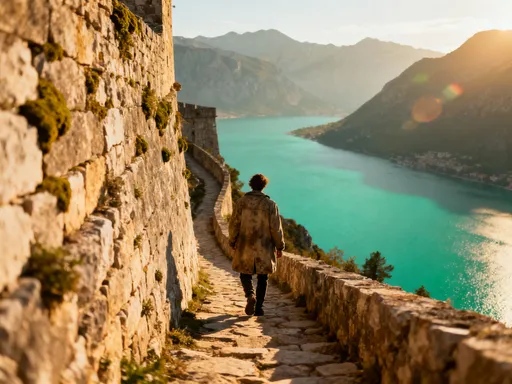
Just a short walk away, Fort Frederick—constructed by the Portuguese in the 17th century and later expanded by the Dutch and British—offers a different kind of presence. Its thick walls, built from coral stone and granite, enclose a space now used by the Sri Lankan Navy, but the outer ramparts are open to visitors. Here, colonial military architecture meets tropical decay: cannons face the sea, their barrels rusted but still imposing, while creeping vines and wild flowers grow through cracks in the masonry. The fort is not frozen in time; it is part of the city’s ongoing narrative. Locals jog along its walls at dusk, couples sit on the ramparts to watch the sunset, and school groups visit to learn about the region’s complex past.
These sites are not isolated landmarks but integrated into daily life. A grandmother might pause at the temple gate to light a lamp before heading to the market. A fisherman might tie his boat near the old Dutch jetty, a structure that has served mariners for centuries. Even the city’s street names reflect this blend—Sinhala, Tamil, and English signs appear side by side, a quiet testament to coexistence. There is no attempt to sanitize or repackage history for tourism. Instead, the past is worn openly, like the chipped paint on a century-old bungalow or the repurposed colonial warehouse now used as a community storage space. This authenticity invites visitors not to gawk, but to listen—to recognize that history here is not behind glass, but in motion.
Street Life: Where Culture Meets the Pavement
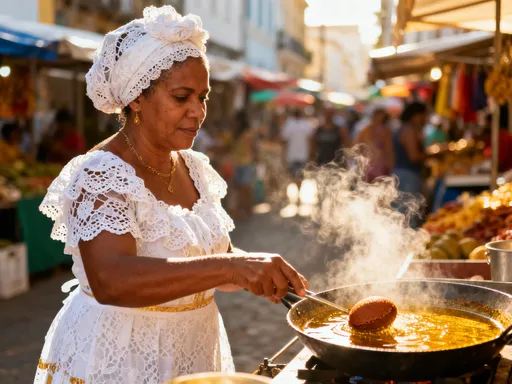
By mid-morning, Trincomalee’s streets come alive with a rhythm all their own. Schoolchildren in crisp white shirts and navy-blue uniforms walk in small groups, books tucked under their arms, their voices rising in playful chatter. Vendors unfold wooden shutters to reveal pyramids of ripe mangoes, coconuts, and dried fish. The clatter of metal pots echoes from roadside kitchens where steaming hoppers and dhal curry are served on banana leaves. Motorbikes weave through traffic with practiced ease, their riders balancing everything from bundles of firewood to live chickens in wicker cages.
This is not a performance for tourists. There are no staged cultural shows or choreographed parades. The city’s authenticity lies in its unselfconscious daily routines. In the Pettah market area, women squat beside colorful plastic tubs of spices—turmeric, cumin, chili powder—while bargaining with customers in rapid-fire Tamil. Nearby, a tailor sits cross-legged on a mat, his sewing machine clicking steadily as he alters a sari blouse. An old man sips tea from a small clay cup at a roadside stall, reading a newspaper in Sinhala, while a radio plays devotional music in the background.
Urban design in Trincomalee supports this organic social fabric. Narrow lanes open into small courtyards where neighbors gather to chat in the late afternoon. Shared water taps serve multiple households, becoming informal community hubs where news is exchanged and laughter flows freely. Temple grounds double as playgrounds, with children chasing each other around stone pillars while elders meditate in shaded corners. Even the placement of trees—mango, jackfruit, and neem—provides natural shelter and sustenance. This is a city built not for efficiency alone, but for connection. There are no sterile plazas or isolated shopping malls. Instead, every space serves multiple purposes, adapting to the needs of the moment.
Hidden Corners: Offbeat Spots with Soul
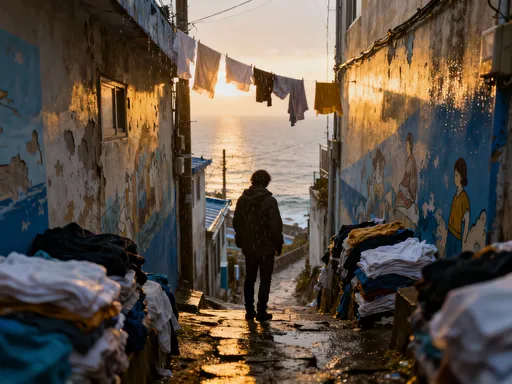
Beyond the main roads and tourist pathways, Trincomalee reveals quieter, more contemplative spaces. In the older neighborhoods, narrow lanes wind between weathered houses, their walls painted in faded blues, yellows, and pinks. Some facades bear the marks of time—cracked plaster, peeling paint, iron grilles twisted by salt air—but they also carry traces of care: potted plants on windowsills, hand-painted signs for home-based businesses, and murals of deities watching over doorways. These are not preserved for heritage tours but lived in, loved, and adapted over generations.
One such lane leads to a forgotten seaside path, accessible only at low tide. Here, the sound of traffic fades, replaced by the soft crunch of coral fragments underfoot and the distant cry of seabirds. A few locals come here to meditate, sitting on flat rocks with their eyes closed, breathing in the sea air. Others walk slowly, barefoot, letting the cool waves wash over their feet. There are no benches, no signs, no facilities—just the raw beauty of land meeting water. Nearby, an abandoned colonial-era building, once a customs office, now stands half-consumed by jungle. Creepers climb its walls, roots crack the floors, and birds nest in the rafters. Yet it does not feel desolate. It feels like nature reclaiming what was left behind, quietly and without drama.
Another hidden gem is the small beach near Samba Wewa, a reservoir on the city’s outskirts. Less frequented than the main beaches, it offers a peaceful retreat where families picnic under casuarina trees and elderly couples walk hand in hand along the shore. Children fly kites made from recycled plastic bags, their laughter carried on the wind. There are no vendors, no music, no crowds—just the simplicity of shared moments. These spaces are not marketed or monetized. They are discovered through wandering, through conversation with locals, through the willingness to move slowly and observe. They remind us that the soul of a city often lies not in its landmarks, but in its overlooked corners.
Colors, Textures, and Light: The Visual Poetry of Trincomalee
To walk through Trincomalee is to witness a city painted by time, tide, and tradition. The visual language here is not curated—it emerges naturally from daily life. At 4 PM, when the sun hangs low over the bay, its golden light spills across the city, illuminating painted shutters in ochre, teal, and coral. The contrast is striking: a rusted metal roof, pitted by salt and rain, glows beside a bright sari draped over a balcony. A child’s chalk drawing on the pavement—a boat, a fish, a sun—fades by evening, only to be replaced the next day.
Graffiti, often overlooked as mere vandalism, tells a subtler story here. On the walls of older buildings, one finds a blend of Tamil script, religious symbols, and nature motifs—peacocks, lotus flowers, waves. Some are faded, barely legible; others are freshly drawn, perhaps by a teenager with a piece of charcoal. These markings are not acts of defiance but expressions of belonging, a way of saying, “I was here.” Even utility poles, wrapped in layers of frayed electrical wires, become part of the city’s texture, their chaotic tangle somehow harmonious against the sky.
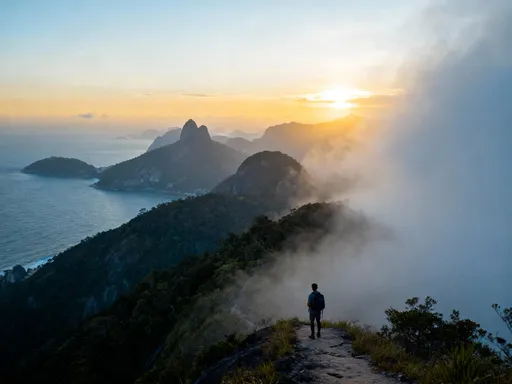
The play of light transforms the city throughout the day. At dawn, everything is soft—mist hovers over the water, silhouetting fishing boats like ghosts. By midday, the sun beats down, bleaching colors and casting sharp shadows. In the late afternoon, warm hues return, gilding rooftops and turning the harbor into a mirror of liquid gold. At night, the city dims—few streetlights, no neon signs—but homes glow from within, their windows lit by oil lamps or bare bulbs. There is no artificial brightness to mask the darkness. Instead, there is intimacy, a sense of closeness fostered by low light and quiet streets. Trincomalee’s beauty is not in perfection, but in its imperfections—each crack, each stain, each patch of peeling paint a testament to a life lived fully.
Practical Magic: Navigating the City Like a Local
Exploring Trincomalee with comfort and respect requires a few simple adjustments. The most important is timing. The midday sun, especially from March to September, can be intense. Early mornings and late afternoons are ideal for walking, offering cooler temperatures and softer light. A wide-brimmed hat, light cotton clothing, and a reusable water bottle are essential. While bottled water is available, many locals use public filtration stations or boil water at home—visitors can do the same in guesthouses that provide safe drinking water.
Transportation in the city is straightforward. Tuk-tuks are the most common mode, and drivers are generally honest if approached with courtesy. Agree on a fare before starting the journey, and consider using the same driver for multiple trips to build rapport. For shorter distances, walking is not only feasible but rewarding—many of the city’s most memorable moments happen by chance, when turning a corner or pausing to watch a street vendor at work. Bicycles can be rented for a more independent exploration, especially along the coastal paths.
Respectful behavior goes a long way. When visiting temples, dress modestly—shoulders and knees covered—and remove shoes before entering. Speak softly, avoid pointing with feet, and ask permission before photographing people. In residential areas, keep noise to a minimum, especially in the early morning or late evening. Support local businesses by buying fruit from street vendors, eating at family-run eateries, and purchasing handmade crafts directly from artisans. These small acts foster goodwill and enrich the experience for both visitor and host.
Why This Cityscape Matters Beyond the Postcard
In an age of curated travel—where destinations are filtered, packaged, and sold as perfect experiences—Trincomalee stands apart. It does not conform to the postcard ideal. It is not polished, nor does it strive to be. Its power lies in its authenticity, in the way it allows visitors to witness a city that exists for its people first, tourists second. This is not a destination to be consumed, but one to be engaged with—slowly, thoughtfully, and with humility.
Urban authenticity matters because it reminds us of what travel can be at its best: a bridge between lives, a chance to see the world through another’s eyes. In Trincomalee, every cracked wall, every shared well, every prayer at dawn speaks of continuity—of a community that has endured, adapted, and thrived. There is no pretense, no performance. Just life, unfolding as it has for generations.
To visit Trincomalee is not to check a box on a bucket list. It is to step into a rhythm older than tourism, shaped by the sea, the sun, and the resilience of its people. It invites us to slow down, to listen, to notice. It asks not for admiration, but for presence. And in return, it offers something rare: a city that is not just seen, but felt—a living mosaic of memory, movement, and meaning.