You Won't Believe These Hidden Photo Spots Along Italy's Amalfi Coast
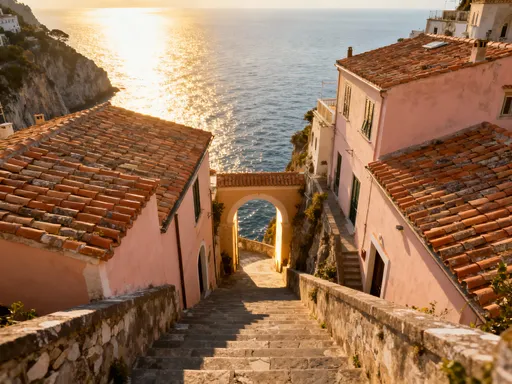
The Amalfi Coast isn’t just a destination—it’s a postcard come to life. I’ve never seen colors this vivid: pastel buildings clinging to cliffs, terracotta roofs stacked like puzzle pieces, and archways framing the Tyrrhenian Sea like natural picture frames. What makes it truly special? The architecture. Every town tells a story through its staircases, domes, and narrow alleys. If you're chasing unforgettable shots, you’re not just looking for views—you're hunting for moments shaped by centuries of coastal craftsmanship. This stretch of southern Italy, carved into steep cliffs between Sorrento and Salerno, has long drawn artists, poets, and travelers. But beyond the well-known vistas lies a quieter, deeper beauty—one that reveals itself in doorways, courtyards, and the way sunlight dances across stone. For the thoughtful traveler with a camera, the Amalfi Coast offers more than scenery; it offers narrative, rhythm, and soul.
Why Architecture Defines the Amalfi Coast’s Visual Soul
The visual magic of the Amalfi Coast is not accidental. It is the result of centuries of architectural adaptation, cultural fusion, and intimate dialogue with the landscape. The region’s built environment reflects a unique blend of Arab-Norman, Byzantine, and Mediterranean influences, shaped by its history as a maritime republic and a crossroads of trade. In the 9th and 10th centuries, Amalfi was a powerful seafaring city-state, exchanging goods and ideas with North Africa, the Middle East, and Constantinople. This legacy lives on in the region’s architecture—in the horseshoe arches, intricate tilework, and vertical urban planning that define its towns.
What makes these structures so visually compelling is how they respond to the terrain. Built on near-vertical cliffs, homes and public buildings are stacked like layers of a cake, connected by stairways and narrow passageways. This verticality isn’t just practical; it’s poetic. It forces a rhythm into the urban fabric, creating natural compositions for photography. The houses, painted in soft pinks, sunflower yellows, and seafoam greens, are not merely decorative—they are functional, using local stucco that reflects sunlight and keeps interiors cool. Roofs are tiled with locally sourced terracotta, while volcanic stone from Mount Vesuvius forms the foundations, anchoring the towns against erosion and time.
Equally important are the materials and craftsmanship. Many facades are adorned with hand-painted ceramic tiles, often depicting lemons, waves, or religious symbols—a nod to the region’s devotion and agricultural pride. These tiles, produced in nearby towns like Vietri sul Mare, are a signature of Amalfi’s identity. Even the way buildings are positioned maximizes sea views and sea breezes, with balconies and loggias strategically placed to capture light and air. This thoughtful integration of form, function, and beauty is what makes the architecture not just picturesque, but deeply human. For the photographer, every corner offers a composition shaped by history, necessity, and artistry.
Positano’s Staircase Labyrinths: Climbing Through Layers of Charm
Positano is often the first image that comes to mind when one thinks of the Amalfi Coast. Its cascading houses, tumbling down the hillside toward the sea, have become iconic. But to photograph Positano well is to move beyond the postcard view from the beach and explore its intricate network of staircases—the scalinatelle that stitch the town together. These narrow, winding stairways are not just pathways; they are the veins of the town, connecting homes, shops, and hidden terraces. Walking them is an experience in itself, offering constantly shifting perspectives and intimate encounters with daily life.
For photographers, the staircases provide unmatched opportunities for layered compositions. As you ascend or descend, the buildings rise around you, their pastel facades glowing in the Mediterranean light. Doorways open onto flower-filled balconies, laundry flutters between windows, and potted lemon trees punctuate the stone walls. The key to capturing these moments is patience and timing. Early morning is ideal, when the sun slants gently across the eastern side of the valley, illuminating the upper levels of town without harsh shadows. By midday, the light becomes flat and intense, but the lower alleys remain shaded and rich with contrast.
One of the most photogenic staircases runs from the Church of Santa Maria Assunta up toward the Fornillo Beach area. Halfway up, a small landing offers a perfect vantage point: the sea glimmers in the distance, framed by arches and rooftops. Another favorite is the Scalinatella degli Artisti, or Artists’ Staircase, where colorful murals and bougainvillea-draped walls create a living gallery. To avoid crowds, arrive before 8 a.m. or return at dusk, when the town glows with warm, golden light. A mid-range zoom lens (24-70mm) works best here, allowing you to switch between wide scenes and tighter details without changing gear. The real magic, however, lies in slowing down—in letting the town reveal itself step by step.
Amalfi Town’s Cathedral Square: Where History Meets the Lens
In the heart of Amalfi town, Piazza del Duomo is a masterpiece of architectural harmony. Dominated by the 9th-century Duomo di Sant’Andrea, the square is a study in layered history. The cathedral’s facade, added in the 13th century, is a striking example of Arab-Norman design, with alternating bands of white marble and deep pink stone creating a zebra-like pattern. Above it rises a majestic bell tower, while a grand staircase of 62 steps leads up to the main entrance, inviting both pilgrims and photographers alike.
Capturing the full grandeur of the Duomo requires careful framing. From the lower end of the piazza, a wide-angle lens can take in the entire staircase, the striped facade, and the surrounding buildings with their wrought-iron balconies. For a more dynamic shot, position yourself slightly to the side to include the curve of the stairs and the movement of people ascending. The square itself is often alive with activity—vendors selling lemon-themed souvenirs, musicians playing classical tunes, and locals sipping espresso at outdoor cafes. Including these elements in the foreground adds life and scale to your images.
To avoid the midday rush, visit early in the morning when the square is still quiet and the light is soft. The golden hour before sunset also brings a warm glow to the pink marble, making it appear almost luminous. For a unique perspective, step into the side alleys that branch off the piazza. One narrow passage to the right of the cathedral opens onto a quiet courtyard with a lemon tree and a view back toward the sea. From here, you can photograph the bell tower rising above the rooftops, framed by archways and vines. The cloister behind the cathedral, with its serene columns and citrus garden, offers another peaceful retreat for contemplative shots. These quieter spaces remind us that even in well-visited landmarks, there are still moments of stillness and intimacy waiting to be discovered.
Ravello’s Villas: Gardens, Terraces, and Timeless Elegance
Ravello, perched high above the coast, offers a different kind of beauty—one of refinement, tranquility, and sweeping vistas. Unlike the bustling coastal towns, Ravello feels suspended in time, a hilltop retreat where music, art, and architecture converge. Its two most famous villas, Villa Cimbrone and Villa Rufolo, are open-air stages for architectural photography, where Renaissance design meets panoramic drama. Both were built by wealthy merchant families and later restored in the 19th and 20th centuries by European aristocrats and artists drawn to the town’s serenity.
Villa Cimbrone is renowned for its Terrazza dell’Infinito—the Terrace of Infinity—a long balcony that seems to float above the sea. Flanked by marble busts and climbing roses, the terrace offers one of the most breathtaking views on the entire coast. To photograph it effectively, use a telephoto lens to compress the layers of the landscape: the terraced hills, the ribbon of coastline, and the distant islands. At sunrise, the light spills over the mountains, turning the sea silver. The villa’s gardens, with their geometric pathways, fountains, and shaded grottoes, provide endless opportunities for symmetry and depth. A wide aperture can isolate details like weathered stone carvings or dew-covered petals, adding texture to your portfolio.
Villa Rufolo, once home to composer Richard Wagner, is equally inspiring. Its lower garden is a riot of color, with hibiscus, oleander, and bougainvillea spilling over ancient walls. The upper terrace frames the coast through a series of arches, creating natural picture frames for your camera. One of the most powerful compositions is shot from inside an arched loggia, using the curve of the stone to draw the eye toward the sea. The villa’s blend of Gothic and Moorish elements—pointed arches, tile floors, and ornate columns—adds a sense of timelessness. Visit on a weekday morning to avoid tour groups, and allow time to simply sit and absorb the atmosphere. In Ravello, photography is not just about capturing images; it’s about capturing mood.
Unexpected Details: Arches, Doorways, and Hidden Alleys
While Positano, Amalfi, and Ravello draw the crowds, some of the most authentic architectural moments are found in the quieter towns of the coast. Atrani, just a short walk from Amalfi, is one of the smallest and most intact medieval villages in Italy. Its compact layout, centered around a small beach and a 9th-century church, feels untouched by time. Here, the architecture is humble yet poetic: whitewashed walls, wooden shutters, and narrow alleys that open unexpectedly onto sea views. One of the most striking features is the network of vaulted passageways that connect different levels of the town, creating natural frames for photography.
Similarly, in Maiori—home to the coast’s longest sandy beach—the historic center reveals quiet corners of everyday life. A simple doorway painted cobalt blue, flanked by potted geraniums, can become a powerful subject. A wrought-iron balcony with a lace curtain moving in the breeze tells a story without words. These small-scale details are often more evocative than grand landmarks because they reflect the lived experience of the place. They invite the viewer to imagine the lives behind the walls, the hands that painted the door, the family that gathers on the terrace each evening.
To find these moments, wander without a map. Turn down alleys that seem to go nowhere. Look up—not just at the sky, but at the way rooflines intersect, how shadows fall across stone, how vines climb ancient walls. Use a prime lens (50mm) to focus on details and create shallow depth of field. These quieter spots are also more forgiving for composition; with fewer people around, you can take your time setting up the shot. In towns like Atrani and Minori, you might have entire streets to yourself at dawn. It’s in these still moments that the true character of the Amalfi Coast reveals itself—not in the crowds, but in the quiet dignity of its architecture.
Photographing Coastal Infrastructure: Stone Walls, Terraces, and Watchtowers
Beyond the towns themselves, the Amalfi Coast’s landscape is shaped by centuries of human intervention. One of the most remarkable features is the system of agricultural terraces that cling to the hillsides, supported by dry stone walls known as muri a secco. Built without mortar, these walls are a testament to traditional craftsmanship and environmental adaptation. They prevent erosion, create flat land for farming, and add texture to the landscape. From a photographic standpoint, they function as natural layers, guiding the eye through the image and adding depth to wide-angle shots.
The terraces were historically used to grow lemons, grapes, and vegetables, and many are still maintained today. Walking along a footpath that follows one of these ancient walls offers a different perspective on the coast—one that emphasizes sustainability and resilience. Early morning light enhances the texture of the stone, casting long shadows that emphasize the craftsmanship. A polarizing filter can help reduce glare on leaves and water, making colors more vivid. For dramatic effect, shoot from below, looking up at a terrace as it rises toward the sky, with a lemon grove in the foreground.
Another architectural remnant of the coast’s history is the Saracen watchtowers perched on remote headlands. Built during the Middle Ages to warn of pirate raids, these stone sentinels stand alone against the sea, their silhouettes stark and enduring. While some are accessible by trail, others can only be seen from the water. A telephoto lens allows you to isolate a tower against the horizon, emphasizing its isolation and strength. These structures are more than relics; they are symbols of vigilance and survival, adding a narrative dimension to your photographs. Together, the terraces and watchtowers remind us that the beauty of the Amalfi Coast is not just aesthetic—it is the product of human ingenuity and perseverance.
Putting It All Together: Planning Your Architectural Photo Journey
Planning a photographic journey along the Amalfi Coast requires more than just a camera—it requires intention. Each town offers a different architectural character, light condition, and rhythm of life. To make the most of your trip, consider structuring your days around elevation and sun direction. Begin in the higher towns like Ravello and Scala in the morning, when the light is soft and the air is clear. Move down to the coastal towns like Positano and Amalfi in the late afternoon, when the sun illuminates the sea-facing facades. Atrani and Maiori are best explored at midday, when the coastal towns are busiest, offering quieter alternatives.
When it comes to gear, versatility is key. A full-frame mirrorless or DSLR camera with two lenses—a 24-70mm f/2.8 for general use and a 70-200mm f/4 for compression and detail—will cover most scenarios. A lightweight tripod is useful for low-light shots and long exposures, especially at dawn or dusk. Don’t overlook the power of natural light; avoid flash, which can flatten textures and disturb the mood. Instead, use reflectors or white surfaces to bounce light into shadowed areas. A polarizing filter enhances skies and reduces glare, while a neutral density filter allows for slower shutter speeds in bright conditions, useful for smoothing water in harbor shots.
But beyond equipment, the most important tool is patience. The best architectural photographs are not taken in haste. They are the result of observation, waiting, and connection. Sit in a piazza. Watch how light moves across a wall. Return to the same spot at different times of day. Let the place speak to you. The Amalfi Coast is not just a collection of pretty buildings; it is a living environment where every stone, every staircase, every arch has a purpose and a story. When you photograph it with respect and curiosity, you don’t just capture images—you preserve moments of harmony between people, place, and time. In doing so, you contribute to a deeper appreciation of a place where engineering, art, and sea unite in perfect balance.