You Won’t Believe These Secret Wild Spaces in Ottawa
When you think of Ottawa, politics and museums probably come to mind—but not me. Last summer, I ditched the downtown buzz and wandered into the city’s hidden green sanctuaries. What I found was mind-blowing: untouched forests, quiet marshes, and trails where you won’t see a single tourist. These protected areas aren’t just scenic—they’re vital. Let me take you where most visitors never go, into the quiet heart of a capital city that pulses with wild life. Just beyond the parliamentary buildings and embassies lies a network of conservation lands that safeguard biodiversity, support mental well-being, and offer rare moments of solitude. This is not the Ottawa most people know, but it might be the one they need to discover.
Ottawa’s Hidden Natural Heart
Ottawa is often celebrated for its grand architecture, national institutions, and bilingual charm. Yet beneath this polished surface lies an extraordinary natural legacy—over 20,000 hectares of protected green space managed by the National Capital Commission (NCC). This includes the National Capital Greenbelt, Gatineau Park, and Mer Bleue Conservation Area, forming a living ring around the urban core. Unlike typical city parks, these are not manicured lawns or playgrounds. They are wilder, more resilient landscapes—forests, wetlands, alvars, and swamps—preserved not just for recreation, but for ecological integrity.
The Greenbelt alone spans nearly 20,000 hectares and encircles much of Ottawa’s southern and western edges. Established in the 1950s, it was originally intended to control urban sprawl and preserve open space. Today, it serves a broader mission: protecting working farms, native forests, and critical wildlife corridors. Within it, places like Stony Swamp and the Carp Hills offer rugged trails, glacial rock formations, and habitats for species ranging from white-tailed deer to rare orchids. These areas remain accessible year-round, yet feel remote—just minutes from shopping centers and subdivisions.
Gatineau Park, located just across the Ottawa River in Quebec, extends this network with over 360 square kilometers of forested hills, lakes, and valleys. Managed jointly by the NCC and provincial authorities, it draws millions of visitors annually but maintains strict conservation protocols. Similarly, Mer Bleue—a 3,400-hectare boreal bog—sits only 20 kilometers southeast of Parliament Hill. Its name, meaning “Blue Sea,” refers to the way fog rolls across the mossy expanse in early morning. Together, these spaces form a green infrastructure that sustains both nature and people.
Why Protected Areas Matter More Than You Think
Many view parks and conservation lands as pleasant amenities—nice places for a Sunday walk or a family picnic. But in reality, these areas function as essential urban infrastructure. Wetlands like Mer Bleue act as natural water filters, removing pollutants and slowing floodwaters during heavy rains. Forests absorb carbon dioxide, helping to mitigate climate change, while also cooling urban areas through shade and evapotranspiration. A single mature tree can absorb more than 20 kilograms of CO₂ per year, and Ottawa’s green spaces collectively store vast amounts of carbon.
Equally important are the wildlife corridors these lands provide. As cities expand, animals such as foxes, beavers, and migratory birds rely on connected habitats to find food, shelter, and breeding grounds. Without protected pathways, species become isolated, leading to genetic decline and local extinctions. The Greenbelt and Gatineau Park serve as critical links between larger ecological zones, allowing animals to move safely across the landscape. This connectivity is not just beneficial—it is necessary for long-term ecosystem health.
For people, the benefits are equally profound. Numerous studies have shown that spending time in nature reduces stress, improves mood, and enhances cognitive function. A 2019 study published in *Nature* found that people who spent at least two hours per week in natural environments reported significantly higher levels of well-being. For busy parents, working professionals, and caregivers—especially women aged 30 to 55 who often juggle multiple responsibilities—these quiet spaces offer a rare opportunity to recharge. They are not luxuries; they are foundational to public health.
Moreover, these areas support environmental education and intergenerational bonding. Families can explore trails together, children can learn about native plants and animals, and seniors can enjoy accessible boardwalks and benches. In a world increasingly dominated by screens and schedules, such experiences ground us. They remind us of our place within a larger web of life. Protecting these lands is not about preserving scenery—it is about sustaining the conditions that make healthy, balanced living possible.
My Journey Into Mer Bleue: A Boreal Bog in the City
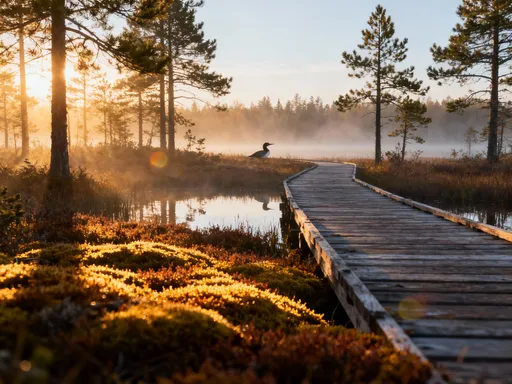
One crisp morning last June, I drove to the edge of Ottawa’s urban fringe and entered a world that felt a thousand miles away. Mer Bleue Conservation Area greeted me with silence—no horns, no voices, just the soft rustle of wind through black spruce and tamarack trees. I stepped onto the elevated boardwalk, its wooden planks slightly springy underfoot, and began walking into the heart of a rare ecosystem: a boreal peat bog.
What struck me first was the texture of the landscape. Thick carpets of sphagnum moss, spongy and damp, stretched in every direction. In places, the moss glowed a vivid green; in others, it turned rusty red, like autumn leaves. Scattered among it were pitcher plants—carnivorous flowers with tubular leaves that trap insects. I crouched to examine one, marveling at how such delicate life thrives in nutrient-poor soil. The bog’s acidity and low oxygen levels slow decomposition, allowing peat to accumulate over thousands of years. Some layers beneath my feet were over 8,000 years old.
As I walked deeper, the air grew cooler and damper. A loon called in the distance, its haunting cry echoing across the marsh. Dragonflies darted over small pools, and a red-winged blackbird clung to a cattail, singing insistently. Despite being only 20 minutes from downtown, I felt completely immersed in wilderness. The boardwalk loop is just over two kilometers long, designed to protect the fragile ecosystem while allowing full immersion. Interpretive signs explained the bog’s formation, its plant life, and its global significance.
Mer Bleue is one of the few remaining boreal bogs in southern Ontario, and its ecological value is internationally recognized. It is designated as a Wetland of International Importance under the Ramsar Convention, a treaty that promotes conservation of critical water habitats. This status ensures ongoing protection and monitoring. Yet few tourists know it exists. Most visitors to Ottawa never leave the core—never see this quiet, ancient place where time seems to slow. For those willing to step off the beaten path, Mer Bleue offers not just beauty, but perspective—a reminder that wildness persists even in the most unexpected corners of our cities.
Gatineau Park: Where Nature Meets Adventure
If Mer Bleue offers stillness, Gatineau Park delivers energy. Spanning over 360 square kilometers of rolling hills, dense forests, and pristine lakes, it is one of Eastern Canada’s most beloved outdoor destinations. Managed by the NCC in cooperation with Quebec authorities, the park welcomes over six million visitors annually. Yet despite its popularity, it remains remarkably well-preserved, thanks to thoughtful planning and strong conservation policies.
One of my favorite trails is the Pink Lake loop, a 4.5-kilometer circuit that winds through mixed hardwood and coniferous forest before opening onto a glassy lake. What makes Pink Lake special is not its color—despite the name, it appears clear and reflective—but its unique geology. The surrounding bedrock contains mica, which gives the water a shimmering quality in sunlight. Along the trail, interpretive panels explain the area’s glacial history and the importance of maintaining water quality. I’ve seen painted turtles sunning on logs, herons stalking fish at dawn, and even a mother otter teaching her pups to swim.
Winter transforms the park into a Nordic wonderland. Over 200 kilometers of cross-country ski trails are meticulously groomed, winding through snow-laden forests and alongside frozen ponds. The NCC operates several warming huts, where skiers can rest, sip hot chocolate, and watch the sun set behind the trees. Fat biking has also grown in popularity, with designated trails allowing cyclists to glide over packed snow. In spring and summer, the Gatineau Parkway becomes a haven for road cyclists and joggers, offering smooth pavement and scenic overlooks with views of Ottawa’s skyline.
What sets Gatineau Park apart is its balance between access and preservation. Trails are carefully routed to avoid sensitive habitats, and certain areas are closed seasonally to protect nesting birds or vulnerable vegetation. Dogs must be leashed, open fires are prohibited, and camping is limited to designated sites. These rules are not arbitrary—they are based on ecological research and long-term monitoring. The park proves that recreation and conservation can coexist, as long as visitors respect boundaries and follow guidelines. For families, couples, and solo explorers alike, it offers adventure without compromise.
The Greenbelt: Ottawa’s Quiet Escape
While Gatineau Park draws crowds and Mer Bleue surprises with its wildness, the National Capital Greenbelt offers something different: consistency. As a year-round retreat just outside the city’s busiest neighborhoods, it provides reliable access to nature without the need for long drives or reservations. Whether it’s a snowy January morning or a humid July afternoon, the Greenbelt remains a place of solace and simplicity.
I often visit Stony Swamp, a 600-hectare section of the Greenbelt known for its rugged terrain and diverse ecosystems. The trail network here includes wooden bridges over streams, rocky outcrops shaped by glaciers, and stands of eastern hemlock that create a cathedral-like atmosphere. On a recent hike, I startled a young deer grazing near a thicket. It bounded away silently, vanishing into the trees. Moments like this—unexpected, fleeting—stay with you. The Greenbelt doesn’t offer grand vistas or dramatic waterfalls. Instead, it rewards patience and presence.
Another gem within the Greenbelt is the Carp Hills, a rugged landscape of exposed bedrock, wetlands, and pine forests. Unlike the softer topography of southern Ontario, this area was shaped by ancient geological forces, resulting in a mosaic of habitats that support rare species like the five-lined skink and the eastern red-backed salamander. Hiking here feels more like exploring northern wilderness than a suburban fringe. Yet it lies within city limits, accessible via local roads and public transit routes.
Beyond recreation, the Greenbelt plays a vital role in climate resilience. Its forests and wetlands help regulate temperature, reducing the urban heat island effect that makes cities uncomfortably hot in summer. It also manages stormwater runoff, absorbing rainwater and filtering it before it reaches rivers. Farmland within the Greenbelt produces local food, reducing transportation emissions and supporting sustainable agriculture. These functions are invisible to most, yet they underpin the city’s livability. The Greenbelt is not just a park—it is a working landscape that sustains both nature and community.
How to Visit Responsibly
With growing interest in outdoor recreation, the pressure on these wild spaces is increasing. More visitors mean more foot traffic, more litter, and greater risk to sensitive habitats. But with mindful behavior, we can enjoy these places without harming them. The key is to follow the principles of Leave No Trace, a widely recognized set of guidelines for minimizing human impact in natural areas.
First and foremost, stay on marked trails. This may seem obvious, but trampling off-path can damage fragile vegetation, compact soil, and disturb wildlife. In bogs like Mer Bleue, even a few footsteps can destroy moss that took decades to grow. Similarly, in forested areas, straying from trails can disrupt nesting birds or rare plant populations. Trails are designed to protect both you and the environment—follow them faithfully.
Second, pack out everything you bring in. This includes food wrappers, tissues, and even biodegradable items like apple cores or banana peels, which can introduce non-native seeds or alter soil chemistry. Carry a small bag for trash, and use designated bins when available. If facilities are full, take your waste with you. Keeping these spaces clean preserves their beauty and protects animals that might ingest harmful materials.
Third, respect wildlife. Observe animals from a distance, never feed them, and keep dogs leashed. Feeding wildlife alters natural behaviors and can lead to dependency or aggression. A seemingly harmless act—like offering a chip to a squirrel—can have long-term consequences. Additionally, be mindful of noise. Speak softly, avoid loud music, and let the sounds of nature dominate. These spaces are sanctuaries for both people and animals.
Before visiting, check the NCC website for trail conditions, closures, and seasonal restrictions. Some areas close temporarily during bird nesting season or after heavy rains to allow recovery. Plan your trip accordingly. Consider using public transit, carpooling, or biking to reduce your carbon footprint. The NCC offers shuttle services during peak seasons, and many trailheads are accessible by bus. By making thoughtful choices, you help ensure these spaces remain healthy and welcoming for everyone.
The Future of Ottawa’s Wild Spaces
As Ottawa continues to grow, the future of its wild spaces hangs in a delicate balance. Urban development, climate change, and increased recreational demand all pose challenges. In recent years, there have been proposals to expand housing and infrastructure into parts of the Greenbelt and surrounding conservation lands. While housing needs are real, sacrificing these areas would come at a high ecological and social cost. Once lost, such landscapes cannot be recreated.
Climate change adds another layer of urgency. Rising temperatures, more frequent storms, and shifting wildlife patterns require resilient ecosystems. Wetlands must absorb heavier rainfall, forests must adapt to new pests and droughts, and species must migrate to cooler areas. The interconnectedness of Ottawa’s green spaces makes them better equipped to handle these changes. Fragmented or degraded lands, by contrast, are far more vulnerable.
The good news is that conservation efforts are gaining momentum. Citizen groups, environmental organizations, and municipal leaders are advocating for stronger protections. Initiatives like the Greenbelt Plan Review and the NCC’s long-term sustainability strategy aim to enhance ecological resilience while expanding public access. Educational programs teach children and adults about the value of biodiversity. These efforts are not just about saving trees or birds—they are about preserving a way of life.
For residents, the most powerful action is awareness. See these wild spaces not as empty land waiting to be developed, but as living, breathing parts of the city’s soul. Visit them regularly, bring your family, and share your experiences. Support policies that protect conservation areas, and speak up when they are threatened. When we treat nature as infrastructure—as essential as water pipes or power lines—we begin to value it properly.
Ottawa’s secret wild spaces are not just escapes from the city. They are the city’s quiet strength. They clean our air, calm our minds, and connect us to something deeper. In a world that often feels chaotic and disconnected, they offer stability and wonder. Let us protect them not for what they are worth on a map, but for what they mean to our hearts. The next time you’re in Ottawa, look beyond the monuments. Step onto a trail, breathe the forest air, and discover the wild capital that waits just beyond the pavement.