You Won’t Believe What I Ate in Salvador
Salvador, Brazil doesn’t just feed you—it speaks to you through its food. From sizzling acarajé on sunlit streets to rich moquecas simmering in clay pots, every bite tells a story of African roots, coastal flavors, and generations of passion. I went not just to taste, but to live the cuisine—and what I discovered went way beyond the plate. This is food with soul, served with pride, and impossible to forget. The moment I stepped into the warm embrace of Bahia’s capital, I understood that dining here is not a routine act, but a celebration of identity, history, and community. Every meal unfolded like a ritual, every flavor carried memory, and every vendor, cook, or grandmother in the kitchen offered more than nourishment—they offered belonging.
Arrival in Salvador: First Bites and Immediate Impressions
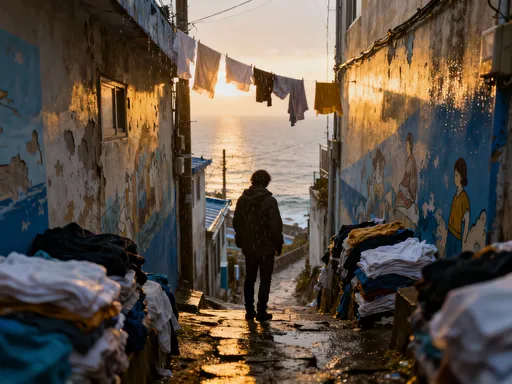
The heat hit first—thick, humid air wrapping around me like a damp towel the second I stepped out of Deputado Luís Eduardo Magalhães International Airport. But before I even reached the taxi stand, another sensation overpowered the discomfort: the deep, earthy aroma of dendê oil frying in large vats on street corners. It was intoxicating, smoky, and rich—an instant signal that I had arrived somewhere deeply distinct. As I rode into the city, the landscape unfolded in layers: pastel-colored colonial buildings climbing steep hills, laundry strung between balconies, and the ever-present rhythm of samba drifting from open windows. By the time I reached Pelourinho, the historic heart of Salvador, my stomach was growling not from hunger, but from anticipation.
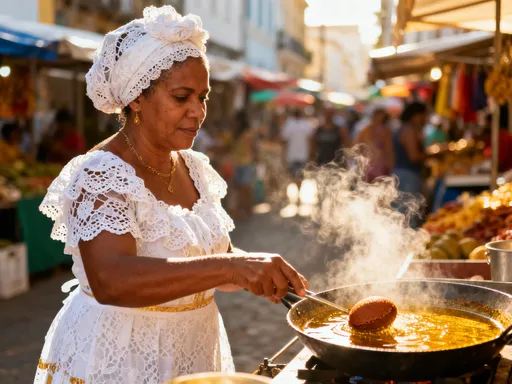
And then, there it was: an elderly woman in a traditional white baiana dress, her turban wrapped high, standing beside a brass-plated cart where golden acarajé puffed and crackled in hot oil. Without hesitation, I approached. She smiled, nodded, and began assembling the iconic street snack with practiced grace—slitting the fried black-eyed pea fritter open, stuffing it with vatapá, a creamy paste of shrimp, coconut, and peanuts, adding crisp malagueta pepper sauce and a sprinkle of fresh herbs. The first bite was a revelation: the crisp outer shell giving way to a soft, savory interior, the heat of the pepper dancing with the nutty richness of the dendê. It wasn’t just food—it was a sensory explosion, layered with history and pride.
As I stood there, juice dribbling down my fingers, a young boy offered me a small cup of sugarcane juice from a nearby stall. An older man clapped as I took another bite. No words were needed. In that moment, I wasn’t a tourist. I was a guest, welcomed into a living culinary tradition. The sounds of berimbau and atabaque drums echoed from a nearby capoeira roda, children danced barefoot on cobblestones, and the scent of roasted cashews and grilled fish filled the air. Salvador doesn’t just serve food—it invites you into its rhythm, one bite at a time.
The Heart of Salvador’s Cuisine: African Heritage and Dendê Oil
To understand Salvador’s food is to understand its soul—and that soul is deeply African. Over 4 million enslaved Africans were brought to Brazil, and many passed through or settled in Bahia. Their culinary traditions didn’t just survive; they thrived, becoming the foundation of Bahian cuisine. At the center of it all is dendê oil, the vibrant red palm oil that gives so many dishes their signature color, aroma, and depth. More than a cooking ingredient, dendê is sacred. In Candomblé religious practices, it is offered to the orixás, the deities of the Yoruba tradition. Its presence in food is not just flavor—it is memory, resistance, and spiritual continuity.
I had the honor of visiting a community-run terreiro de comida, a home-style kitchen often linked to Candomblé temples, where women prepare traditional meals using ancestral methods. There, Dona Maria, a cook in her sixties with hands worn by decades of stirring giant pots, showed me how to make caruru—a dish of okra, shrimp, peanuts, and dendê, slowly simmered until thick and fragrant. “This is not just food,” she said, stirring with a wooden paddle. “This is our ancestors speaking. Every ingredient has meaning.” She explained how okra symbolizes resilience, shrimp represent the sea’s bounty, and peanuts connect to West African farming traditions.
Another dish, abará, is made from mashed black-eyed peas seasoned with onions and peppers, wrapped in banana leaves, and steamed. It is often offered to the orixá Exu at dawn. While tourists may see it as a snack, for practitioners, it is an act of devotion. I learned that many Bahian dishes originated as sacred offerings before becoming everyday meals—a testament to how faith and food are inseparable here. Ingredients like dried shrimp, malagueta peppers, and coconut milk are not chosen merely for taste; they are cultural anchors, linking modern Salvador to a past of survival, adaptation, and enduring identity.
The use of dendê, in particular, reflects this deep connection. Though it is high in saturated fat, it is used in moderation and prized for its unique flavor profile—earthy, slightly sweet, with a bold aroma. Health experts caution against overconsumption, but in Bahia, it is not seen as a dietary risk, but as a cultural necessity. To remove dendê from Bahian food would be like removing rhythm from samba. It is the heartbeat of the cuisine, and its presence ensures that every meal carries the weight and warmth of history.
Beyond Street Food: Inside a Traditional Bahian Home Kitchen
While street food offers an immediate taste of Salvador’s spirit, the true depth of its cuisine reveals itself at the family table. Through a local guide, I was invited into the home of the Santos family in the neighborhood of Rio Vermelho—a modest two-story house with a tiled courtyard and a kitchen that smelled of wood smoke and simmering broth. Dona Lúcia, the matriarch, wore a floral apron and moved with quiet authority as she prepared a full Bahian meal for Sunday lunch. Her daughter and grandchildren peeled onions, chopped cilantro, and set the long wooden table under a canopy of bougainvillea.
The centerpiece was moqueca de peixe, a slow-cooked fish stew made with red snapper from the nearby bay. Dona Lúcia used a traditional clay pot called a panela de barro, which she said distributes heat evenly and enhances the flavor. She seared the fish lightly in dendê, then layered it with sliced tomatoes, onions, garlic, and coriander, pouring in rich coconut milk and a splash of fresh lime juice. The pot went over a wood-fired stove, where it would simmer for nearly two hours. “No rush,” she said with a smile. “Good food takes time.”
As the stew cooked, she prepared side dishes: farofa, toasted cassava flour mixed with butter and herbs; pirão, a thick porridge made from fish broth and manioc; and a salad of papaya, orange, and mint. The kitchen buzzed with laughter and stories—her grandson joked about burning the farofa, her daughter teased her about using “too much pepper again.” When the meal was finally served, everyone gathered around the table, hands reaching for shared bowls, glasses clinking with local cajuína, a non-alcoholic drink made from cashew fruit.
What struck me most was not just the depth of flavor, but the sense of connection. This was not dining as performance or trend—it was food as love, as legacy. Every ingredient had been chosen with care, every step of preparation done by hand. There were no shortcuts, no pre-made sauces. The meal took hours to prepare, but no one minded. In fact, the time spent together was part of the joy. I realized that in Salvador, cooking is not a chore—it is an act of care, a way of honoring family, ancestors, and the rhythms of daily life. To eat in a Bahian home is to be adopted, if only for a meal, into a culture that feeds the body and the soul equally.
Markets as Culinary Theaters: Shopping at Mercado Modelo and Feira de São Joaquim
If the home kitchen is the heart of Bahian cuisine, the markets are its stage. Salvador’s markets are not sanitized shopping centers—they are vibrant, noisy, aromatic spaces where food, culture, and commerce collide in the most beautiful way. I began at Mercado Modelo, a historic market built in the 19th century near the port. Once a customs house, it now houses dozens of stalls selling handicrafts, spices, cachaça, and, most importantly, food. Tourists flock here, yes, but so do locals picking up last-minute ingredients or grabbing a quick lunch of empada or tapioca.
I sampled dried fruits like cajá and umbu, tart tropical delights native to the region’s semi-arid hinterlands. Vendors offered small cups of cajuína and chilled coconut water straight from the shell. One stall specialized in doces coloniais—handmade sweets like cocada (coconut candy) and pé de moleque (peanut brittle)—each wrapped in colorful paper. But beyond the treats, I noticed something deeper: the pride in presentation. Every stall was meticulously arranged, with fruits stacked in pyramids, herbs bundled like bouquets, and fish laid out on ice with their eyes still bright.
For a more authentic, everyday experience, I visited Feira de São Joaquim, one of the largest open-air markets in Latin America. Here, the scale was staggering. Rows of stalls stretched for blocks, selling everything from live chickens to medicinal herbs, fresh cheese, and mountains of yams, cassava, and sweet potatoes. The seafood section was particularly impressive—shrimp, crab, octopus, and whole fish displayed on crushed ice, brought in that morning from the Bay of All Saints. Vendors called out prices, shoppers bargained with ease, and the air hummed with energy.
What impressed me most was the speed and freshness of the supply chain. A fish caught at dawn could be on a family’s table by noon. There were no plastic-wrapped packages or long refrigerated journeys—just direct, honest commerce. I watched a woman buy a snapper, hand it to a fishmonger to clean, then walk it next door to a cook who would prepare it on the spot for a small fee. This is food in motion, deeply embedded in daily life. The market isn’t just a place to buy ingredients—it’s a social hub, a place to see neighbors, exchange news, and feel the pulse of the city. In Salvador, the market is where cuisine begins, long before it reaches the pot.
Modern Twists: How Chefs Are Reinventing Bahian Flavors
While tradition remains strong, Salvador’s culinary scene is not frozen in time. A new generation of chefs is reimagining Bahian cuisine with creativity, precision, and deep respect. I visited several contemporary restaurants where classic dishes are presented with modern techniques—without losing their soul. At one acclaimed eatery in Graça, I was served an “acarajé tartare”—a deconstructed version of the street snack, with finely diced shrimp, black-eyed peas, and vatapá foam arranged on a plate like a work of art. It looked nothing like the fried fritters of Pelourinho, but the flavors were unmistakably Bahian.
Another chef, trained in Europe but born in Salvador, told me over moqueca served with saffron foam and edible flowers, “We don’t want to replace tradition. We want to elevate it.” His menu featured dishes like dendê-infused risotto and coconut milk gelato with malagueta pepper swirl. These are not gimmicks—they are thoughtful reinterpretations, designed to introduce Bahian flavors to new audiences while honoring their roots.
Still, innovation comes with tension. Some locals worry that commercialization and tourism could dilute authenticity. I spoke with a street vendor who frowned at the idea of “fancy acarajé” costing ten times what she charges. “They take our food, make it expensive, and call it art,” she said. It’s a valid concern. When cultural heritage becomes a trend, there’s a risk of extraction without recognition. Yet many of the young chefs I met are deeply committed to ethical sourcing, hiring local cooks, and crediting the origins of each dish.
The best of this movement doesn’t erase tradition—it expands it. A young woman chef runs a pop-up series called “Sabores da Avó” (Grandmother’s Flavors), where she recreates her grandmother’s recipes using heirloom ingredients and serves them in community centers. Another uses her restaurant to fund culinary workshops for low-income youth. These efforts show that modernization, when done with respect, can be a form of preservation. Salvador’s cuisine is not just surviving—it is evolving, with confidence and care.
Practical Tips for Eating Like a Local in Salvador
For visitors eager to experience Salvador’s food authentically, a few practical tips can make all the difference. First, timing matters. Street food like acarajé is best in the late afternoon, when baianas set up their carts in Pelourinho, Campo Grande, and other busy areas. Arrive early—popular vendors often sell out by evening. Look for stalls with long lines of locals; that’s usually a sign of quality and freshness.
Hygiene is important, but don’t let fear keep you from trying. Reputable vendors use gloves or tongs, keep their oil clean, and cover ingredients. If a cart looks neglected or the oil is dark and smoky, move on. When in doubt, ask your hotel or guide for recommendations. Many local tour companies now offer food walks that introduce visitors to trusted vendors while supporting small businesses.
When ordering, a simple “Pode me servir um acarajé com tudo, por favor?” (Can I have an acarajé with everything, please?) goes a long way. Most vendors are happy to explain ingredients, especially if you show genuine interest. Don’t be afraid to try lesser-known dishes like abará, caruru, or munguzá, a sweet corn pudding often eaten during festivals.
For sit-down meals, neighborhoods like Rio Vermelho, Graça, and Barra offer a mix of traditional and modern restaurants. Try to book in advance, especially on weekends. Pair your meal with cultural experiences—dine near a capoeira performance, visit a Candomblé cultural center, or attend a live samba circle. Food in Salvador is never isolated; it’s part of a larger tapestry of music, dance, and community.
Lastly, drink safely. Stick to bottled or filtered water, and enjoy local drinks like água de coco, cajuína, or craft cachaça from reputable brands. Avoid ice in unknown establishments. With these simple precautions, you can savor Salvador’s cuisine with confidence and joy.
Why Salvador’s Food Stays With You—Long After the Last Bite
Months after my trip, I still dream of Salvador’s flavors. Not just the taste of moqueca or the crunch of acarajé, but the warmth of the people, the rhythm of the streets, the sense of being truly welcomed. What makes Bahian cuisine unforgettable is not just its boldness or complexity—it is its humanity. This is food that refuses to be rushed, commercialized, or reduced to a trend. It is food that remembers, celebrates, and connects.
In a world where dining is often transactional, Salvador offers something rare: meals as moments of shared life. Whether served on a clay plate in a grandmother’s kitchen or handed over a brass cart on a sunlit street, every bite carries meaning. It speaks of survival, of joy, of identity forged through centuries of change. To eat in Salvador is to participate in a living tradition—one that feeds not just the body, but the spirit.
So if you travel to Brazil, go beyond the beaches and monuments. Let food be your guide. Let the scent of dendê lead you through narrow alleys, let a stranger’s smile invite you to share a meal, let the rhythm of the city sync with your heartbeat. Because in Salvador, you don’t just eat—you belong. And that, more than any flavor, is what stays with you long after the last bite.