You Won’t Believe These Hidden Spots in Kotor, Montenegro
Kotor, Montenegro, is more than just a postcard-perfect bay—it’s a living storybook of medieval charm and mountain drama. I wandered its stone alleys and climbed ancient trails, discovering viewpoints and quiet corners most travelers miss. This isn’t just a guide—it’s a real look at how to experience Kotor’s most breathtaking scenery, from hidden churches to cliffside paths, with practical tips to make your visit unforgettable. Nestled at the end of a winding, fjord-like bay framed by towering limestone peaks, Kotor feels like a secret the Adriatic has kept for centuries. The moment you step through its massive city gates, time slows. The scent of salt air mingles with blooming jasmine, and the echo of footsteps on centuries-old stone sets the rhythm of your journey. This article reveals the soul of Kotor beyond the cruise ship crowds, guiding you to serene chapels, panoramic trails, and waterside taverns where locals still gather at dusk. Whether you’re drawn by history, nature, or the quiet magic of forgotten corners, Kotor rewards those who look a little deeper.
Arriving in Kotor: First Impressions That Take Your Breath Away
The journey to Kotor is an experience in itself, offering dramatic first glimpses that prepare you for what lies ahead. If arriving by road, the coastal highway winds along the Bay of Kotor, revealing sudden, breathtaking views at every turn. The bay stretches over 28 kilometers, making it the southernmost fjord-like formation in Europe, though technically a submerged river canyon. As you round the final bend, Kotor Old Town appears like a miniature city cradled between sheer cliffs and shimmering water. The contrast of terracotta rooftops against gray stone walls and deep blue sea is unforgettable. Many visitors arrive by ferry from nearby coastal towns like Herceg Novi or Tivat, and this vantage point offers a panoramic approach—watching the fortified walls rise from the water as you glide closer.
For those driving, parking options are limited but manageable. The main public parking area, located just west of the Old Town near the bus station, fills quickly during peak season. Arriving before 9 a.m. or after 6 p.m. ensures easier access and fewer crowds. The main entrance to the Old Town, known as the Sea Gate, is just a five-minute walk from this lot. Alternatively, visitors arriving by cruise ship dock at the modern pier a short distance from the historic center. From there, a flat, well-paved path leads directly into the heart of the city, passing souvenir stalls and local guides offering walking tours. While convenient, this route often deposits large groups all at once, so timing your entry wisely can make a significant difference in your experience.
The emotional impact of seeing Kotor for the first time cannot be overstated. Standing at the edge of the bay, with mountains rising over 1,000 meters on either side, one feels both awe and serenity. The walled city, dating back to the 9th century, seems to grow organically from the rock, as if nature and human craftsmanship have conspired to create something timeless. This moment—when the noise of travel fades and the beauty sinks in—is worth protecting. To preserve it, many seasoned travelers recommend skipping the immediate photo session and instead taking a quiet lap around the outer walls before diving into the alleys. This simple pause allows the mind to absorb the scale and stillness before the day’s exploration begins.
Practical advice for arrival centers on timing and mindset. Early mornings offer not only cooler temperatures but also a rare quietness, with only bakers opening their ovens and fishermen returning with the day’s catch. By arriving early, you gain access to the Old Town before tour groups descend. Additionally, consider visiting during shoulder seasons—late spring (May to early June) or early autumn (September to October)—when the weather remains pleasant but the crowds are thinner. These months also bring softer light, ideal for photography and long walks. The key to a meaningful arrival is not just logistics, but intention: come not to check a box, but to step into a living history shaped by Venetian, Ottoman, and Slavic influences, all visible in the architecture and daily life of this coastal gem.
Exploring the Old Town: Where Every Corner Tells a Story
Stepping into Kotor’s Old Town is like entering a three-dimensional museum where every alley, archway, and courtyard holds a chapter of history. The city’s layout follows a medieval plan, with narrow cobbled streets branching like veins from central squares. One of the most important is Trg od Oružja, or the Arsenal Square, a wide open space that once served as a military parade ground. Today, it hosts open-air markets, seasonal concerts, and families enjoying the shade of plane trees. From here, labyrinthine paths lead in all directions, some so narrow that two people must turn sideways to pass. This intricate network was designed not for convenience, but for defense—confusing invaders while allowing residents to navigate with ease.
Among the architectural highlights stands the Cathedral of Saint Tryphon, a Romanesque masterpiece completed in 1166. Its twin bell towers dominate the skyline, and inside, 13th-century frescoes and a silver reliquary containing the saint’s remains draw quiet reverence. But beyond the major landmarks, the true magic lies in the unmarked corners. A weathered door might open to a sunlit courtyard where geraniums spill from stone planters. A forgotten stairway could lead to a rooftop terrace with a private view of the bay. These discoveries happen not by following a map, but by allowing yourself to wander without urgency. Many visitors find that the best way to explore is to choose a direction and simply keep walking, turning left or right based on instinct rather than itinerary.
Along the way, small family-run shops offer handmade souvenirs, from embroidered linens to olive oil soaps. Unlike mass-produced trinkets found near cruise docks, these items carry the imprint of local craft. Conversations with shop owners often reveal personal stories—how a grandmother taught embroidery, or how a recipe for rakija has been passed down for generations. These interactions add depth to the visit, transforming a sightseeing tour into a human connection. Even the cats of Kotor, sunbathing on warm stones or darting through arches, have become unofficial mascots, beloved by residents and visitors alike.
Walking slowly is not just a suggestion—it’s a philosophy in Kotor. Rushing through the alleys means missing the subtle details: a carved stone lion above a doorway, a faded fresco on a back wall, the sound of a piano drifting from an open window. The city rewards patience. Those who linger often find hidden fountains, quiet benches, or a patch of ivy-covered wall that seems to hum with centuries of stories. By embracing a slower pace, you align yourself with the rhythm of local life, where meals last hours and conversations unfold over coffee. This is not a place to conquer, but to absorb—one quiet moment at a time.
The Fortress Climb: A Must-Do for Epic Panoramas
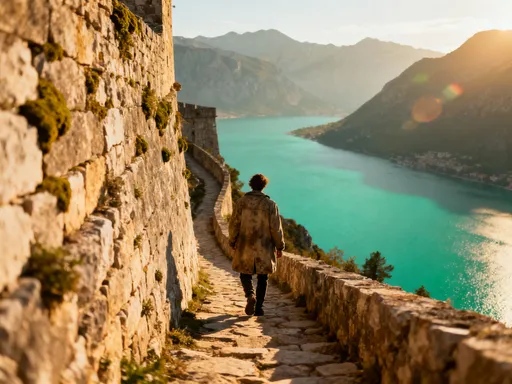
No visit to Kotor is complete without the ascent to the San Giovanni Fortress, a Venetian-era stronghold perched high above the Old Town. The climb involves approximately 1,350 stone steps, winding up the mountainside in a series of steep switchbacks. While challenging, the effort is repaid with one of the most spectacular views in the Adriatic. The path begins just behind the Cathedral of Saint Tryphon, marked by a small stone arch. From the first few steps, the perspective begins to shift—rooftops shrink, streets become ribbons, and the full curve of the bay unfolds below.
The best time to begin the climb is early in the morning, ideally between 7:00 and 8:30 a.m., when temperatures are cooler and the light is soft. Summer afternoons can be punishing, with little shade and surface temperatures soaring on the dark stone. Mornings also offer the chance to climb in near solitude, with only the sound of birds and distant church bells. As you rise, the city’s layout becomes clear—the grid of streets, the harbor, the ferry routes—all laid out like a map. Around the halfway point, a rest area with a small kiosk provides water, snacks, and a chance to catch your breath while taking in the view.
The changing scenery with elevation is one of the climb’s greatest rewards. At lower levels, you’re surrounded by ancient walls and overhanging greenery. Higher up, the vegetation thins, revealing raw rock and sweeping vistas. The final stretch includes steeper, uneven steps, some worn smooth by centuries of footsteps. Near the top, the ruins of the fortress come into view—crumbling ramparts, cannon emplacements, and archways framing the horizon. From this vantage, the entire Bay of Kotor stretches out like a silver ribbon, with tiny boats dotting the water and distant villages clinging to the shore.
Safety is essential on this hike. While the path is well-maintained, it was not built for modern footwear. Sturdy walking shoes with good grip are strongly recommended—flip-flops or smooth soles can be dangerous on wet or uneven steps. Carrying a bottle of water is non-negotiable, especially in summer. While there are no official opening hours or entry fees, the trail is not lit at night, so climbing after dusk is not advised. Parents should supervise children closely, as some sections have drop-offs without railings. Despite the physical demand, the climb is achievable for most travelers in moderate health. Many find the journey as meaningful as the destination—a personal challenge rewarded with silence, perspective, and a profound sense of accomplishment.
Hidden Churches and Quiet Corners Off the Beaten Path
Beyond the main attractions, Kotor holds a network of lesser-known churches and secluded spaces that offer moments of peace and reflection. One such gem is the Church of St. Luka, located just off the main thoroughfare near the old hospital building. Smaller and quieter than the Cathedral of Saint Tryphon, this 12th-century church features a simple stone façade and a serene interior with faded frescoes. On weekday mornings, it’s not uncommon to find a local resident lighting a candle or a priest preparing for a small service. These quiet rituals, unchanged for generations, connect the present to the past in a deeply personal way.
Another hidden spot lies in the network of side alleys behind the Maritime Museum. While the museum itself draws visitors with its collection of ship models and nautical artifacts, the surrounding lanes are often overlooked. One narrow passage leads to a secluded courtyard where a fig tree grows from ancient stone, its branches shading a worn bench. This is the kind of place where time seems to stop—no tour groups, no loudspeakers, just the whisper of wind through leaves. Nearby, the Chapel of St. Anne, accessible only by a steep, narrow stairway, offers a sense of discovery. Though small, its arched ceiling and simple altar create a space of reverence, often used by locals for private prayer.
Finding these quiet corners requires stepping away from the main routes, especially during cruise ship days when the central squares fill with visitors. One strategy is to explore the upper levels of the Old Town, where residential homes line quieter streets. Another is to visit in the late afternoon, when guided tours conclude and many travelers return to their ships or hotels. During these hours, the city breathes again—shopkeepers close their shutters, children play in the squares, and the scent of dinner cooking fills the air. These transitional times offer the best chance to experience Kotor as it is lived, not just visited.
The value of these quiet moments cannot be measured in photos or checklists. They are the pauses between the highlights—the unexpected bench with a bay view, the sound of a distant accordion, the warmth of a stranger’s smile. In a world that often prioritizes speed and visibility, Kotor’s hidden corners remind us that some of the most meaningful travel experiences are the ones no one tells you to see. They are not advertised, not rated, and often not even named. But they stay with you—proof that beauty and peace are still possible, even in places touched by tourism.
Beyond the Walls: Scenic Spots Only Locals Know
To truly understand Kotor, one must look beyond its walls. Across the bay, a lesser-known viewpoint offers a stunning alternative perspective. While most tourists focus on the fortress view, locals often recommend a quiet path near the village of Muo, where a natural overlook frames the entire Old Town against the water. This spot, sometimes called the 'Lady of the Rocks' viewpoint though unmarked on official maps, is accessible by a short drive or a scenic coastal walk. From here, the symmetry of the bay is most apparent—the mountains folding around the city like protective arms, the reflections dancing on calm mornings.
Another authentic experience is a short boat ride to Perast, a picturesque village about 7 kilometers north. This journey, available through small local operators, takes about 20 minutes and offers views of the bay from the water. Perast itself is home to two small islands—Our Lady of the Rocks, a man-made islet with a baroque church, and the natural island of St. George. While the former draws visitors, the latter remains peaceful, accessible only to those who respect its status as a resting place. Walking through Perast’s quiet streets, with pastel-colored houses and maritime relics, feels like stepping into a different century.
For those who enjoy coastal walks, the path from Kotor to Prčanj is a hidden treasure. This 3-kilometer route follows the shoreline, passing old villas, olive groves, and small coves where locals swim in summer. Unlike paved tourist trails, this path retains a rustic charm, with uneven stones and natural overgrowth. It’s not always marked, so a basic map or GPS is helpful. Along the way, you might pass fishermen mending nets or families gathering herbs from the hillsides. These encounters, brief but genuine, offer a glimpse into daily life along the bay.
Using local transport—small ferries, shared taxis, or regional buses—opens up even more possibilities. These services are affordable and connect Kotor to nearby villages often missed by guidebooks. By choosing them, travelers support the local economy and gain access to quieter, more authentic experiences. Whether it’s a conversation with a boat captain or a shared ride with residents, these moments deepen the journey. Exploring beyond the walls is not about escaping Kotor, but expanding your understanding of it—as part of a living, breathing region shaped by sea, mountain, and community.
Sunset & Nighttime Magic: Kotor’s Second Act
As the sun begins its descent behind the Dinaric Alps, Kotor undergoes a quiet transformation. The golden light washes over the stone walls, turning them amber, then rose, then deep violet. One of the best places to witness this is from the waterfront promenade, where benches face west toward the mountains. Another option is the lower section of the fortress path, where a natural ledge offers a panoramic view without the full climb. As daylight fades, the bay mirrors the sky, and the first stars appear above the peaks. This is Kotor’s second act—a gentler, more intimate performance than the daytime spectacle.
After dark, the city sheds its tourist energy. The crowds thin, the music from cafes softens, and the warm glow of lanterns replaces harsh daylight. The main squares, once packed, become peaceful again. Families stroll with children, couples share quiet dinners, and old men play chess under gas lamps. The rhythm slows, inviting visitors to do the same. Walking the empty alleys at night is a unique experience—safe, serene, and filled with the scent of night-blooming flowers.
A relaxed dinner at a waterside konoba, or traditional tavern, completes the evening. These family-run restaurants serve fresh seafood—grilled octopus, black risotto with cuttlefish, and local mussels—paired with Montenegrin wines like Vranac or Krstač. The service is unhurried, the tables close together, and the atmosphere warm. Many konobas have outdoor seating right on the water, where the sound of lapping waves accompanies your meal. This is not fine dining, but something more valuable: authentic, unpretentious hospitality.
Staying late or visiting early reveals a different Kotor—one that belongs as much to its residents as to its guests. The magic of these hours lies in their impermanence. They cannot be scheduled or rushed. They must be earned by patience, by presence. For those willing to linger, the night offers not just beauty, but belonging—a sense that for a brief moment, you are not just passing through, but part of the story.
Putting It All Together: Planning Your Perfect Day in Kotor
Creating a balanced day in Kotor means blending must-see sights with room for spontaneity. A suggested itinerary begins early—arriving by 8 a.m. to explore the Old Town before the crowds. Spend an hour walking the main squares and alleys, then visit the Cathedral of Saint Tryphon. By 9:30, start the fortress climb, reaching the top by 11:00 for panoramic views in soft morning light. Descend by 12:30 and refuel with a light lunch at a local bakery—try the burek, a savory pastry filled with cheese or meat.
In the afternoon, take a short break to rest and hydrate. At 2:00 p.m., board a small boat to Perast, enjoying the bay from the water and exploring the twin islands. Return by 4:30 and spend the next hour discovering hidden churches and quiet courtyards in the upper Old Town. As sunset approaches, find your spot on the waterfront or lower fortress path. After dark, reserve a table at a konoba for a leisurely dinner, allowing the evening to unfold naturally.
Throughout the day, practical considerations matter. Bottled water is available at small shops and kiosks—carry at least one liter, especially in summer. Public restrooms are limited; the main ones are near the bus station and ferry terminal. While many shops and restaurants accept cards, smaller vendors and boat operators prefer cash, so carry some euros. Wi-Fi is widely available, but signal can be spotty in narrow alleys and on the fortress path.
Ultimately, the best moments in Kotor are not the ones planned, but the ones discovered. A sudden downpour that sends you into a centuries-old arcade. A conversation with a local artist selling paintings in the square. A cat that follows you for three blocks. These unplanned encounters, small and fleeting, often become the heart of the memory. The key is to slow down, stay open, and let Kotor reveal itself in its own time. Because in a world of crowded destinations and rushed itineraries, the true luxury is presence. And in Kotor, presence is the most beautiful souvenir you can take home.